The Ultimate Guide to Fruits for Diabetics : What to Eat, What to Avoid, and 20 Safe Recipes
When it comes to fruits for diabetics, you’ve probably heard conflicting advice. “Fruit is full of sugar. Diabetics should avoid it.
That advice is wrong – and it’s hurting millions of people who love fruit and need its nutrients.

Here’s the truth : Not all fruits are created equal. Some fruits spike your blood sugar. Others actually help control it. The difference isn’t about “good fruit” vs “bad fruit” – it’s about understanding glycemic index (GI) and glycemic load (GL) .
Understanding low glycemic fruits and how fruit and blood sugar interact is the key to finding the best fruits for diabetes.
In this complete guide, you’ll discover :
- ✅ The truth about fruit and diabetes (what your doctor may not tell you)
- ✅ A complete GI table for 20+ fruits – printable and fridge-ready
- ✅ 20 diabetic-friendly recipes (breakfast, snacks, desserts, and main dishes)
- ✅ Expert tips to eat fruit without spiking your blood sugar
- ✅ Answers to the 15 most common questions about fruit and diabetes
According to the Wikipedia page on type 2 diabetes , this condition affects millions of people worldwide – but proper nutrition, including the right fruits, can make a significant difference.
Whether you have type 2 diabetes, prediabetes, or simply want stable energy, this guide is for you.
This complete guide to fruits for diabetics will show you exactly what to eat, what to avoid, and how to enjoy fruit safely.
✨ Free Ebook: 5 Healthy Snack Recipes ✨
💌 Get more recipes by email! Subscribe to our newsletter for weekly diabetes-friendly recipes and tips. Subscribe →
Why You’ll Love This Guide
Unlike generic advice you might find elsewhere, this guide is based on scientific research and aligns with recommendations for managing type 2 diabetes from leading health organizations.
🍎 Complete fruit GI table – Know exactly which fruits are safe and which to limit
🍒 20 diabetic-friendly recipes – Smoothies, salads, desserts, and snacks that taste amazing
📊 Glycemic load explained – Why portion size matters more than sugar content
❓ FAQ – Answers to the 15 most common questions about fruits and diabetes
🩺 Expert-based – Recommendations aligned with the American Diabetes Association
📋 Printable quick reference – Stick it on your fridge for easy daily decisio
The Truth About Fruit and Diabetes
The best fruits for diabetics are low in glycemic index and rich in fiber. Here’s your complete table.
Many diabetics fear fruit because of one word : fructose. Fructose is a natural sugar found in fruit. And yes, too much sugar – any sugar – can raise blood glucose.
But here’s what most people don’t understand.
Whole fruit is not the same as table sugar, high-fructose corn syrup, or fruit juice. Whole fruit comes packaged with fiber, water, vitamins, antioxidants, and polyphenols – all of which slow down sugar absorption and reduce inflammation.
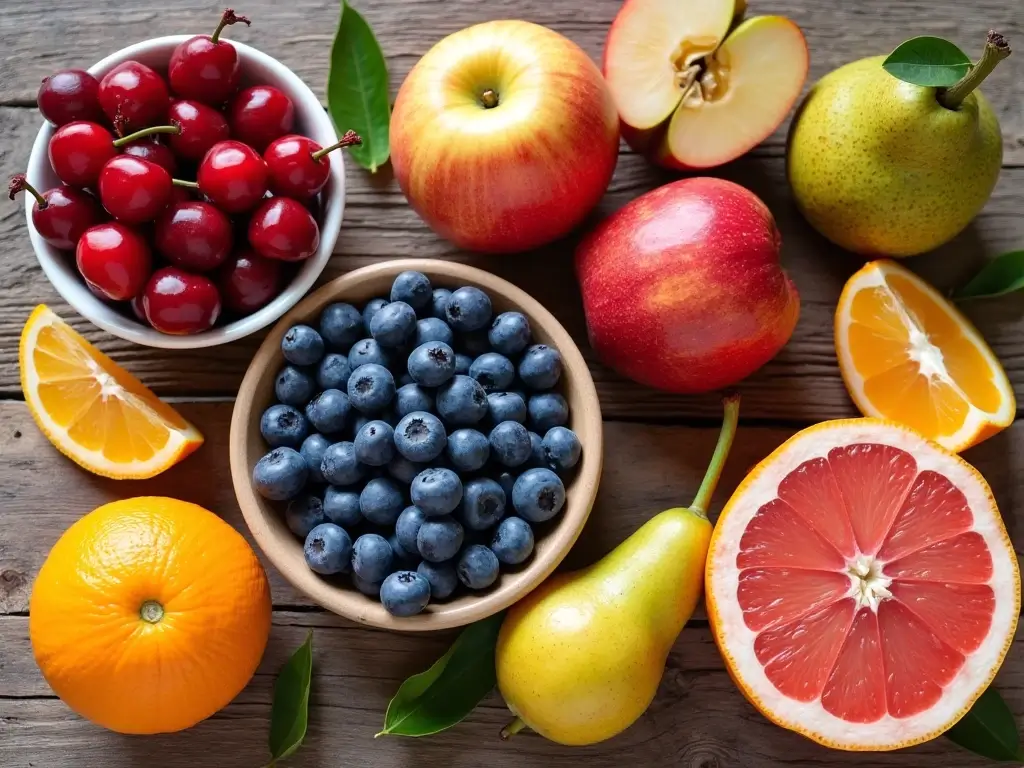
The American Diabetes Association states clearly : Fruit is a healthy choice for people with diabetes. The key is choosing the right fruits and watching portion sizes.
One study published in the journal PLOS Medicine followed over 500,000 people for several years. Researchers found that people who ate at least two servings of whole fruit per week had a 23% lower risk of developing type 2 diabetes compared to those who ate less than one serving per month.
Another study in the New England Journal of Medicine showed that replacing fruit juice with whole fruit significantly reduces diabetes risk.
The takeaway ? Don’t fear fruit. Learn how to choose it wisely.
Understanding Glycemic Index vs. Glycemic Load
Before we dive into the fruit table, you need to understand two simple concepts : glycemic index (GI) and glycemic load (GL).
Glycemic Index (GI) measures how quickly a food raises your blood sugar on a scale from 0 to 100.
- Low GI = 55 or less (good choice)
- Medium GI = 56 to 69 (moderate)
- High GI = 70 or higher (limit or avoid)
Glycemic Load (GL) is more practical. It combines GI with portion size. A food can have high GI but low GL if you eat a small portion.
For example, watermelon has a high GI (76) but a low GL (5) because it’s mostly water. You can eat a small amount without spiking your blood sugar.
For diabetics, GL is often more important than GI alone.
Here’s a simple rule : Low GL = 10 or less. Medium GL = 11 to 19. High GL = 20 or more.
All the fruits listed in the table below are low GL when eaten in recommended portions.
Best Fruits for Diabetics
The following low GI fruits are the best choices for stable blood sugar. Refer to this table daily.
Complete Low GI Fruits Table (Printable)
Here’s your fridge-ready reference table. Save it, print it, or pin it.
This glycemic index fruit chart focuses on high fiber fruits and low sugar fruits that won’t spike your glucose.
| Fruit | GI | GL per portion (1/2 cup or 1 small fruit) | Recommendation |
|---|---|---|---|
| Cherries | 20 | 3 | ✅ Best choice |
| Grapefruit | 25 | 3 | ✅ Best choice |
| Pear | 38 | 4 | ✅ Best choice |
| Apple | 39 | 5 | ✅ Best choice |
| Orange | 40 | 5 | ✅ Best choice |
| Strawberries | 41 | 4 | ✅ Best choice |
| Peaches | 42 | 5 | ✅ Best choice |
| Plums | 40 | 5 | ✅ Best choice |
| Blueberries | 53 | 6 | ✅ Good choice |
| Blackberries | 25 | 4 | ✅ Best choice |
| Raspberries | 32 | 4 | ✅ Best choice |
| Kiwi | 50 | 7 | ✅ Good choice |
| Grapes | 53 | 8 | ⚠️ Moderate |
| Mango | 51 | 8 | ⚠️ Moderate |
| Banana (firm) | 55 | 9 | ⚠️ Moderate |
| Banana (ripe) | 62 | 12 | ⚠️ Limit |
| Pineapple | 66 | 9 | ⚠️ Limit |
| Watermelon | 76 | 5 | ⚠️ Limit (low GL) |
| Dried fruits (dates, raisins) | 65+ | 20+ | ❌ Avoid |
| Canned fruit in syrup | 65+ | 20+ | ❌ Avoid |
How to use this table :
- ✅ Best choice : Eat daily, 1-2 servings
- ✅ Good choice : Eat 3-4 times per week
- ⚠️ Moderate/Limit : Eat occasionally, small portions
- ❌ Avoid : Not recommended for regular consumption
Step-by-Step Guide to Eating Fruit Safely
Follow these 5 simple steps every time you eat fruit.
Step 1 : Choose low GI fruits
Refer to the table above. Berries, cherries, apples, pears, and citrus are your best choices.
Step 2 : Measure your portion
One serving = one small fruit or 1/2 cup of cut fruit. Use your hand as a guide (fist = apple, cupped hand = berries).
Step 3 : Pair with protein
Never eat fruit alone. Add 2 tablespoons of nuts, 1/4 cup of Greek yogurt, or a hard-boiled egg.
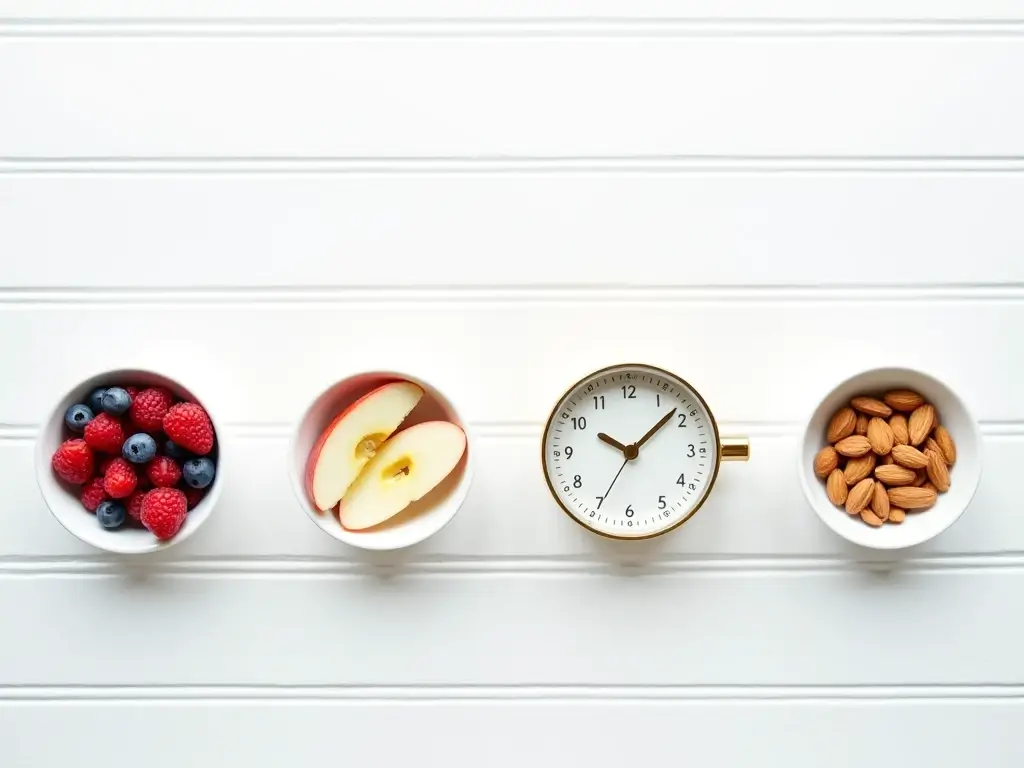
Step 4 : Eat at the right time
Enjoy fruit as part of a meal or immediately after. Avoid eating fruit on an empty stomach.
Step 5 : Test and track
Check your blood sugar before and 2 hours after eating a new fruit. Write down the results. Everyone responds differently.
Fruits to Avoid (or Strictly Limit)
Knowing which are the fruits to avoid with diabetes is just as important as knowing the safe ones. Pay attention to glycemic load of fruits – not just GI.
Some fruits are problematic for diabetics. Here’s why.
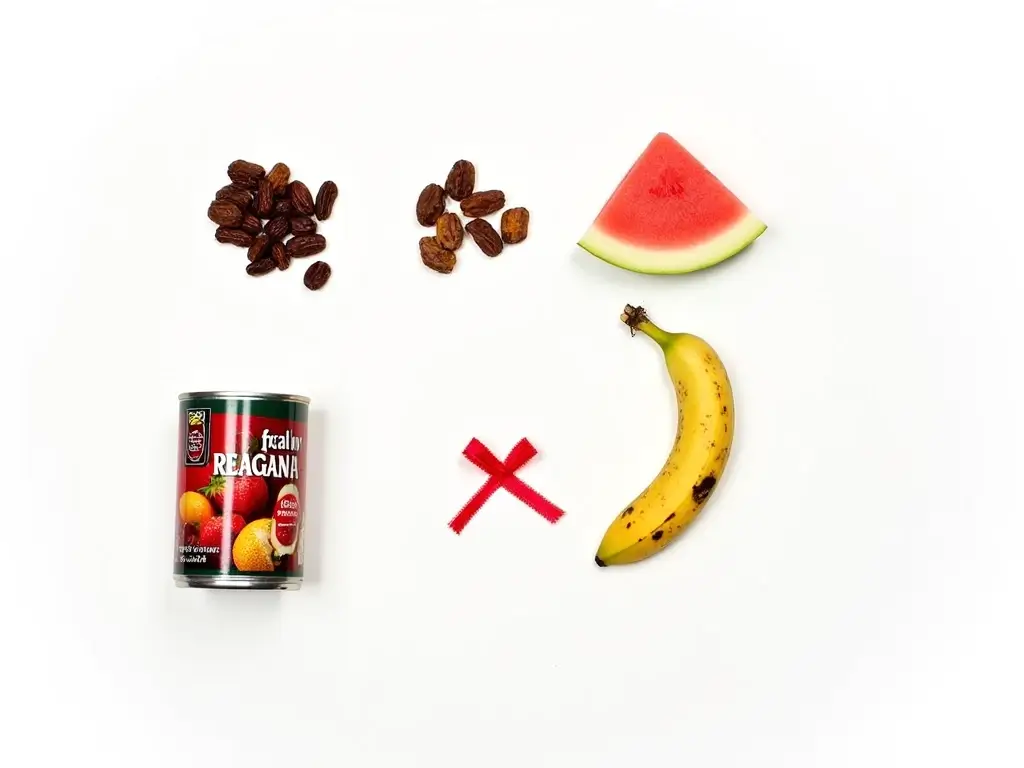
Dried fruits (dates, raisins, figs, prunes, dried apricots). Drying removes water and concentrates sugar. A small box of raisins contains as much sugar as a handful of grapes, but in a much smaller volume. It’s easy to overeat dried fruits. If you do eat them, stick to one tablespoon or less.
Canned fruits in syrup. These are often packed in heavy syrup, which is pure liquid sugar. Always choose canned fruit in water or 100% juice – and drain the liquid before eating.
Fruit juices. Even 100% natural fruit juice lacks fiber. Without fiber, sugar enters your bloodstream rapidly. A glass of orange juice (250 ml) has a GL of 15 – much higher than a whole orange (GL 5). Choose whole fruit over juice every time.
Overripe bananas. As bananas ripen, their starch converts to sugar. A ripe banana (yellow with brown spots) has a GI of 62, while a firm banana (still slightly green) has a GI of 55. Choose firmer bananas for better blood sugar control.
The Science of Fruit and Blood Sugar (Simple Explanation)
When you eat a piece of fruit, your body breaks down its carbohydrates into glucose (sugar). This glucose enters your bloodstream. Your pancreas releases insulin, a hormone that moves glucose from your blood into your cells for energy.
High GI fruits (watermelon, pineapple, ripe bananas) :
- Sugar enters blood FAST
- Insulin spikes high
- Sugar crashes quickly
- You feel tired and hungry again soon
Low GI fruits (berries, cherries, apples, pears) :
- Sugar enters blood SLOWLY
- Insulin rises gradually
- Energy lasts for hours
- You feel focused and full
The fiber in whole fruit acts like a sponge. It absorbs water and creates a gel in your digestive system. This gel slows down the release of sugar into your bloodstream. That’s why eating a whole apple is much better than drinking apple juice.
The result ? Stable blood sugar = stable energy, stable mood, and better long-term health.
10 More Low GI Fruits You Might Not Know
Beyond the common fruits, here are some lesser-known options that are excellent for blood sugar control.
1. Guava (GI 12-20). Guava is packed with vitamin C and lycopene. It has very low GI and high fiber. Eat the skin for maximum benefit.
2. Starfruit (GI 16). Starfruit is low in sugar and high in vitamin C. It’s crunchy, refreshing, and perfect for salads.
3. Rhubarb (GI 15). Technically a vegetable, but often eaten like a fruit. Rhubarb is very low in sugar. Use it in compotes or baked dishes.
4. Prickly pear (GI 25). Studies show prickly pear may actually lower blood sugar. It’s rich in fiber and antioxidants.
5. Cranberries (GI 25). Fresh cranberries are very low in sugar. Avoid dried cranberries or sweetened cranberry juice.
6. Passion fruit (GI 30). The edible seeds add fiber, which slows sugar absorption. Eat fresh, not sweetened.
7. Boysenberries (GI 30). Like blackberries, boysenberries are low GI and high in fiber.
8. Loganberries (GI 30). Another excellent berry choice. Use fresh or frozen.
9. Elderberries (GI 25). Elderberries are rich in antioxidants. Use them in syrups or teas (with no added sugar).
10. Mulberries (GI 25). Fresh mulberries are sweet but low GI. They contain a compound that may help regulate blood sugar.
Seasonal Fruit Guide for Diabetics
Eating fruit in season gives you the best flavor and nutrition. Here’s what to enjoy each season.
Spring (March to May)
- Best choices : Strawberries, grapefruit, rhubarb
- Moderate : Pineapple (small portions)
- Avoid : Canned fruit in syrup
Summer (June to August)
- Best choices : Cherries, blueberries, blackberries, raspberries, peaches, plums
- Moderate : Grapes, firm bananas, kiwi
- Limit : Watermelon, ripe bananas, mango
Fall (September to November)
- Best choices : Apples, pears, cranberries, figs (small portions)
- Moderate : Grapes
- Limit : Dried fruits (stick to 1 tablespoon)
Winter (December to February)
- Best choices : Oranges, grapefruit, kiwi, frozen berries
- Moderate : Pomegranate seeds (1/4 cup)
- Avoid : Canned fruit, fruit juices
Year-round safe choices : Frozen berries (no added sugar), unsweetened applesauce (1/4 cup serving), canned fruit in water (drained).
Portion Size Visual Guide (No Measuring Cups Needed)
You don’t always have measuring cups with you. Here’s how to estimate portions using your hand.
| Fruit | One serving size | Visual cue |
|---|---|---|
| Apple or pear | 1 small | The size of your fist |
| Orange | 1 small | The size of your fist |
| Berries | 1/2 cup | A cupped hand |
| Grapes | 10-12 grapes | A small handful |
| Cherries | 10-12 cherries | A small handful |
| Banana | 1/2 medium | Half of a fist |
| Grapefruit | 1/2 medium | A cupped hand |
| Dried fruit | 1 tablespoon | The tip of your thumb |
Rule of thumb : If it looks like too much, it probably is. Start with less. You can always eat more later if your blood sugar allows.
How Different Preparations Affect Fruit GI
The way you prepare fruit changes how it affects your blood sugar.
| Preparation | Effect on GI | Best for diabetics ? |
|---|---|---|
| Raw, whole | Lowest GI | ✅ Best choice |
| Blended (smoothie) | Slightly higher GI | ✅ OK with protein added |
| Cooked (baked, stewed) | Higher GI | ⚠️ Moderate |
| Juiced | Highest GI | ❌ Avoid |
| Canned in water | Moderate GI | ⚠️ OK if drained |
| Canned in syrup | Very high GI | ❌ Avoid |
| Dried | Very high GI | ❌ Avoid |
| Frozen (no sugar) | Same as raw | ✅ Best choice |
Cooking tip : If you cook fruit, keep the skin on when possible. The skin contains fiber that slows sugar absorption. Add cinnamon – studies show cinnamon may help lower blood sugar response.
Common Myths About Fruit and Diabetes (Debunked)
Myth 1 : Diabetics can’t eat any fruit.
Fact : Most diabetics can eat fruit daily. Choose low GI fruits and watch portions.
Myth 2 : Fruit is nature’s candy – it’s all sugar.
Fact : Whole fruit contains fiber, water, vitamins, and antioxidants. It’s very different from candy.
Myth 3 : Organic fruit is lower in sugar.
Fact : Organic and conventional fruit have similar sugar content. The difference is in pesticide use, not sugar.
Myth 4 : Green smoothies are always healthy.
Fact : Some green smoothies contain large amounts of high GI fruit and added sweeteners. Check ingredients.
Myth 5 : You should only eat fruit in the morning.
Fact : Fruit can be eaten any time of day. Pair it with protein for better blood sugar control.
Myth 6 : Frozen fruit loses nutrients.
Fact : Frozen fruit is often picked at peak ripeness and retains most nutrients. It’s an excellent choice.
Myth 7 : Fruit causes diabetes.
Fact : Whole fruit does NOT cause diabetes. In fact, regular fruit consumption is associated with lower diabetes risk.
How to Eat Fruit Without Spiking Blood Sugar
Learning how to eat fruit with diabetes is simple once you understand fruit portion size for diabetics and the importance of pairing with protein.
Following these simple rules will help you enjoy fruits for diabetics without worrying about blood sugar spikes.
Here are 6 practical tips to enjoy fruit safely.
Pair with protein. Eating fruit alone can cause a sugar spike. But adding protein slows digestion and stabilizes blood sugar. Try apple slices with peanut butter, berries with Greek yogurt, or a pear with a handful of nuts.
Eat whole, don’t drink. Juicing removes fiber. Smoothies can be okay if you use whole fruit and no added sugar, but eating whole fruit is always better.
Choose low GI fruits. Refer to the table above. Berries, cherries, apples, pears, and citrus fruits are your best friends.
Watch portion size. One serving is one small fruit or 1/2 cup of cut fruit. Don’t eat a whole bowl of grapes. Measure your portions until you learn what a serving looks like.
Don’t eat fruit alone. Eat fruit as part of a meal or snack that includes protein, healthy fat, or fiber. For example, add berries to your oatmeal, or have an apple after a meal.
Test your blood sugar. Everyone reacts differently to foods. Check your blood sugar before and two hours after eating a new fruit. This will tell you how your body responds.
20 Diabetic-Friendly Fruit Recipes
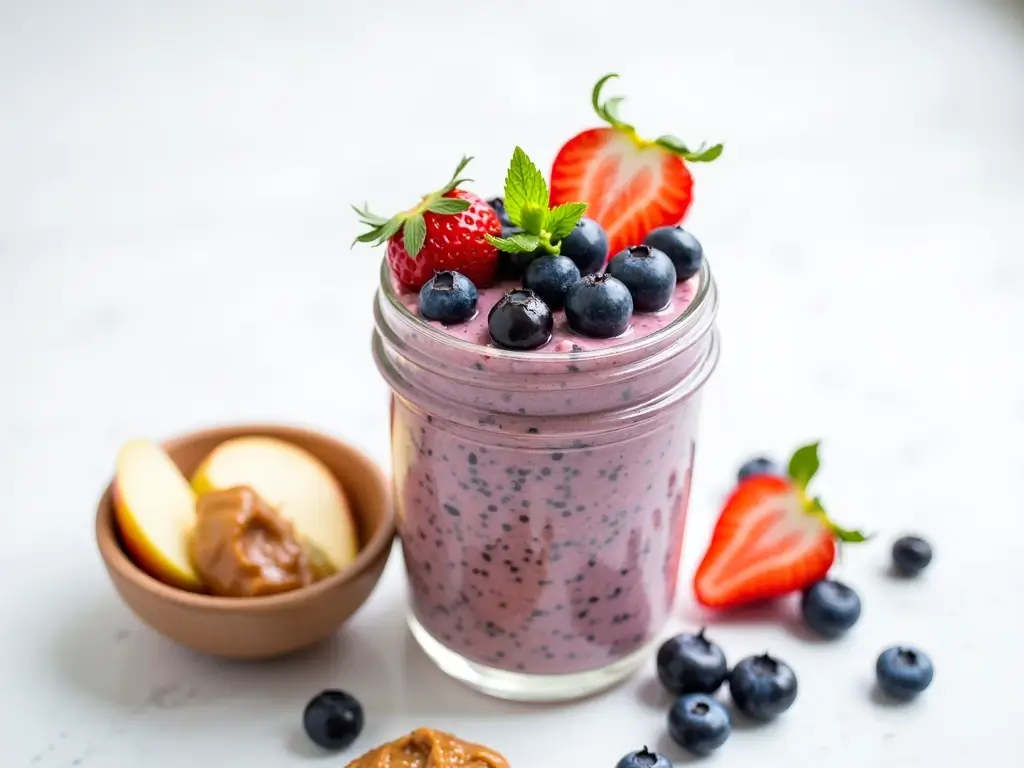
All 20 recipes below use only the best fruits for diabetics – no added sugar, no hidden syrups.
Breakfast Recipes (5)
1. Berry & Spinach Smoothie (no added sugar)
- 1 cup spinach
- 1/2 cup frozen mixed berries
- 1 scoop unflavored protein powder
- 1 cup unsweetened almond milk
Blend until smooth. Serve immediately.
2. Greek Yogurt Parfait with Berries
- 1/2 cup plain Greek yogurt
- 1/4 cup mixed berries (strawberries, blueberries)
- 1 tablespoon chopped walnuts
Layer yogurt, berries, and walnuts in a glass.
3. Apple Cinnamon Oatmeal
- 1/2 cup steel-cut oats
- 1 small apple, diced
- 1/2 teaspoon cinnamon
- 1 cup water or unsweetened almond milk
Cook oats, stir in apple and cinnamon.
4. Grapefruit & Avocado Salad
- 1/2 grapefruit, segmented
- 1/4 avocado, sliced
- Mixed greens
- Lemon juice and olive oil dressing
A refreshing breakfast or side dish.
5. Chia Seed Pudding with Berries
- 3 tablespoons chia seeds
- 1 cup unsweetened almond milk
- 1/4 cup mixed berries
Refrigerate overnight. Top with berries before serving.
Snacks & Sides (5)
6. Apple Slices with Almond Butter
- 1 small apple, sliced
- 2 tablespoons almond butter
Dip apple slices into almond butter.
7. Frozen Grapes
- 1 cup red or green grapes
Wash grapes, freeze for 2 hours. Nature’s candy.
8. Pear Slices with Cottage Cheese
- 1 small pear, sliced
- 1/4 cup low-fat cottage cheese
Top cottage cheese with pear slices.
9. Berry & Nut Mix
- 1/4 cup fresh strawberries or blueberries
- 10 almonds or walnuts
A perfect portable snack.
10. Cucumber & Strawberry Salad
- 1/2 cup sliced strawberries
- 1/2 cup sliced cucumber
- 1 tablespoon apple cider vinegar
Light, refreshing, and hydrating.
Desserts (5)
11. Baked Pears with Cinnamon
- 2 pears, halved
- 1 teaspoon cinnamon
Bake at 375°F for 15 minutes.
12. Berry Chia Jam (sugar-free)
- 2 cups mixed berries
- 3 tablespoons chia seeds
Simmer berries 10 minutes, stir in chia seeds, cool.
13. Dark Chocolate Dipped Strawberries
- 6 large strawberries
- 1/4 cup dark chocolate chips (85% cocoa)
Melt chocolate, dip strawberries, refrigerate.
14. Grilled Peaches with Greek Yogurt
- 2 peaches, halved
- 1/4 cup plain Greek yogurt
Grill peaches 2 minutes per side, top with yogurt.
15. Frozen Banana Bites (small portion)
- 1 small firm banana, sliced
- 2 tablespoons dark chocolate (melted)
Dip banana slices in chocolate, freeze 1 hour. Eat only 2-3 pieces.
Main Dishes with Fruit (5)
16. Chicken & Apple Salad
- 2 cups mixed greens
- 1 grilled chicken breast, sliced
- 1/2 small apple, diced
- 1 tablespoon walnuts
- Apple cider vinegar dressing
17. Pork Tenderloin with Roasted Plums
- 1 pork tenderloin
- 4 plums, halved
- Rosemary, olive oil
Roast at 400°F for 20 minutes.
18. Salmon with Grapefruit Salsa
- 2 salmon fillets
- 1 grapefruit, segmented
- 1/4 red onion, diced
- Cilantro, lime juice
Top grilled salmon with salsa.
19. Spinach & Strawberry Salad with Chicken
- 2 cups fresh spinach
- 1/2 cup sliced strawberries
- 1 grilled chicken breast, sliced
- 1 tablespoon sunflower seeds
- Balsamic vinaigrette
20. Turkey Burgers with Grilled Peaches
- 2 turkey patties
- 2 peach halves, grilled
- Lettuce, red onion
Serve burger topped with grilled peach.
Printable Quick Reference : Fruits for Diabetics
| Category | Fruits | Portion | Frequency |
|---|---|---|---|
| ✅ Best choices | Cherries, grapefruit, pears, apples, oranges, berries (all), peaches, plums | 1 small or 1/2 cup | Daily |
| ⚠️ Moderate | Grapes, mango, firm banana, kiwi | 1/2 cup | 2-3 times/week |
| ❌ Limit/avoid | Watermelon, pineapple, ripe banana, dried fruits, canned fruits in syrup | Very small or none | Occasionally |
Print this table and stick it on your fridge.

Frequently Asked Questions (FAQ)
1. Can diabetics eat fruit ?
Yes. Whole fruit is healthy for diabetics. Choose low GI fruits like berries, cherries, apples, and pears. Always eat whole fruit, not juice.
2. What is the best fruit for diabetics ?
Berries (strawberries, blueberries, raspberries, blackberries) are among the best. They have low GI, high fiber, and powerful antioxidants.
3. Is watermelon bad for diabetics ?
Watermelon has high GI (76) but low GL (5). You can eat a small portion (1/2 cup) occasionally without spiking your blood sugar.
4. Can diabetics eat bananas ?
Yes, but choose firm bananas that are still slightly green. Ripe bananas have higher GI. Eat 1/2 a banana as a serving.
5. Is orange juice safe for diabetics ?
No. Orange juice lacks fiber and spikes blood sugar quickly. Eat a whole orange instead.
6. Can diabetics eat dried fruit ?
Dried fruit is very concentrated in sugar. If you eat it, stick to one tablespoon or less. Dates, raisins, and dried apricots are high in sugar.
7. What about frozen fruit ?
Frozen fruit is excellent – it’s picked at peak ripeness and has no added sugar. Check the label to ensure no syrup added.
8. Can diabetics eat grapes ?
Yes, in moderation. Grapes have moderate GI (53) and GL (8). Stick to 1/2 cup or about 10-12 grapes.
9. Is honey better than sugar for diabetics ?
Honey has a slightly lower GI (50-58) than table sugar (65-80), but it still raises blood sugar. Use sparingly.
10. Can diabetics eat smoothies ?
Yes, if you make them with whole fruit, no added sugar, and include protein and healthy fat. Avoid store-bought smoothies.
11. What’s the worst fruit for blood sugar ?
Dried fruits and canned fruits in syrup are the worst. Among fresh fruits, ripe bananas, watermelon, and pineapple have higher GI.
12. Can diabetics eat fruit at night ?
Yes, but choose low GI fruits like berries or a small apple. Pair with a protein like Greek yogurt or nuts.
13. How much fruit can a diabetic eat per day ?
Most guidelines recommend 2-3 servings of fruit per day. One serving = one small fruit or 1/2 cup of cut fruit.
14. Does cooking fruit change its GI ?
Yes. Cooking breaks down fiber and can raise GI. For example, baked apples have higher GI than raw apples. Eat raw fruit when possible.
15. Can fruit reverse diabetes ?
No single food reverses diabetes. But a diet rich in low GI fruits, vegetables, lean protein, and healthy fats – combined with exercise – can improve blood sugar control and even put type 2 diabetes into remission.
16: Can I eat fruit if I have gestational diabetes ?
Yes. Gestational diabetes fruit choices are the same as for type 2 diabetes. Stick to low glycemic fruits like berries and apples. Avoid fruit juice and dried fruit. Always pair with protein.
17: What is type 2 diabetes ?
Type 2 diabetes is a chronic condition that affects how your body processes blood sugar. Unlike type 1 diabetes, type 2 is often linked to lifestyle factors and can sometimes be managed or even reversed with diet and exercise.

Conclusion
You don’t have to fear fruits for diabetics. You just have to choose wisely and follow the steps in this guide.
Stick to low GI fruits like berries, cherries, apples, pears, and citrus. Watch your portion sizes. Pair fruit with protein or healthy fat. And always eat whole fruit, not juice.
Start with one recipe from this guide. Then another. Within a few weeks, you’ll know exactly which fruits work for your body – and you’ll enjoy every delicious bite.
Whether you have type 2 diabetes fruit concerns, prediabetes, or just want steady energy, choosing low carb fruits and antioxidant fruits will transform your health.
🍽️ Ready to eat smarter ?
👉 Subscribe to our newsletter and get new diabetic-friendly recipes delivered straight to your inbox. No spam. Just delicious, healthy ideas.
🔗 Explore More
👉 Low Glycemic Index Food List + 30 Recipes
👉 Diabetic Dinner Recipes Ready in 30 Minutes
👉 Sugar-Free Desserts for Diabetics
🔗Medium Post
Share this guide with someone who needs it. 📌
✨ Free Ebook: 5 Healthy Snack Recipes ✨
💌 Get more recipes by email! Subscribe to our newsletter for weekly diabetes-friendly recipes and tips. Subscribe →

About the Author
This recipe was created and reviewed by Cooking All Recipes, a food-focused platform dedicated to easy, tested, and family-friendly recipes.
Our recipes are inspired by classic American and British cuisine and are carefully written to ensure clarity, taste, and reliability for home cooks.
Each recipe is tested multiple times to ensure consistent results for home bakers.

How did you find this recipe?
There are no reviews yet. Be the first one to write one.