High Protein Vegan Dinner Recipes – Easy & Delicious Guide

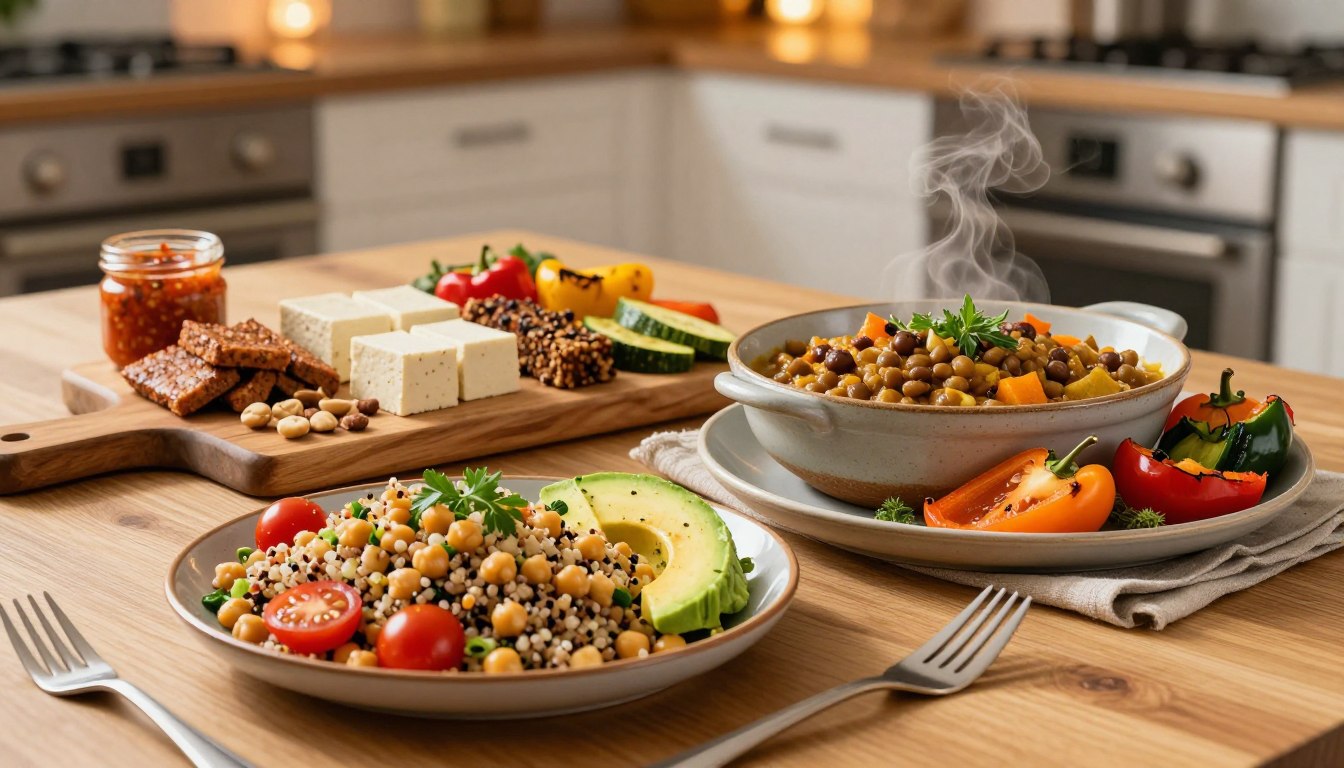
I’ve found that high protein vegan dinner recipes are key to a plant-based diet. They give our bodies the protein they need and offer tasty, fulfilling meals. Plus, they’re easy to make.
Planning lets us enjoy tasty, healthy meals any day. This guide will show you how to make easy vegan dinner recipes full of plant-based protein. It’s all about making your diet goals easier to reach.
Table of Contents
✨ Free Ebook: 5 Healthy Snack Recipes ✨

💌 Get more recipes by email! Subscribe to our newsletter for weekly diabetes-friendly recipes and tips. Subscribe →
Key Takeaways
- Discover the benefits of high-protein vegan dinner recipes for a healthy lifestyle
- Explore easy and delicious meal prep ideas for busy weeknights
- Learn how to incorporate plant-based protein into your daily meals
- Find satisfying and flavorful dinner recipes that are perfect for any occasion
- Get started with simple and effective vegan dinner recipes
Why I Choose High-Protein Vegan Dinners
I started eating high-protein vegan dinners to boost my energy and support my active lifestyle. I also wanted to reduce my environmental impact. Plant-based eating has shown me that high-protein vegan dinners are good for my health and the planet.
The Energy and Satisfaction Factor
High-protein vegan dinners give me lots of energy and keep me satisfied. A good vegan meal with plenty of protein helps me stay full and focused all day. This is key to a healthy and productive life.
Supporting My Active Lifestyle
I need a diet that supports my active lifestyle. High-protein vegan dinners help me recover from workouts and build muscle. Foods like legumes, tofu, and tempeh give me the protein I need for muscle repair and growth.
Environmental and Ethical Benefits
Choosing high-protein vegan dinners also has environmental and ethical benefits. Animal agriculture harms the environment and animals. By eating plant-based food, I reduce my impact on the planet and support sustainable farming. Plus, it’s better for animal welfare and reduces animal exploitation.
Adding high-protein vegan dinners to my meals has been a transformative experience. It’s not just good for me, but also for the planet.
Best Plant-Based Protein Sources I Use for Dinner
I’ve learned that mixing different plant-based proteins is essential for tasty vegan dinners. It not only meets my protein needs but also keeps my meals exciting and varied.
Legumes and Beans: My Pantry Staples
Legumes and beans are vital in my vegan kitchen. They’re full of protein, fibre, vitamins, and minerals. Here are some of my go-to options:
- Lentils – Whether red, green, or brown, lentils are versatile and cook quickly, making them perfect for last-minute dinners.
- Chickpeas – Great in curries, stews, or roasted as a snack, chickpeas are a protein-rich addition to any meal.
- Black Beans – A staple in many vegan diets, black beans are great in bowls, salads, or as a filling for vegan tacos.
- Kidney Beans – These are fantastic in chilli recipes or mixed with rice for a complete protein meal.
Tofu, Tempeh, and Edamame
Tofu, tempeh, and edamame are soy-based proteins that are staphetically high in protein and versatile in cooking. Here’s how I use them:
- Tofu – I love using extra-firm tofu, marinated and baked or stir-fried, as a protein-packed centrepiece for my meals.
- Tempeh – With its nutty flavour, tempeh is great marinated and grilled or crumbled into dishes for added protein.
- Edamame – Steamed or boiled, edamame make a great appetiser or snack, and they’re a hit with both kids and adults.
As “The Vegan Society” notes, incorporating a variety of these soy products into your diet can significantly boost your protein intake.
Seitan and Vital Wheat Gluten
Seitan, made from vital wheat gluten, is a meat substitute that’s high in protein and has a texture similar to meat when cooked. I use it in:
- Sautés – Coupé en fines lamelles, le seitan absorbe les saveurs du plat tout en offrant une texture agréable.
- Stews – It soaks up the broth, becoming tender and flavorful.
High Protein Grains: Quinoa, Farro, and Amaranth
Grains like quinoa, farro, and amaranth are not only high in protein but also rich in fibre and other nutrients. Here’s how I incorporate them:
- Quinoa – As a complete protein, quinoa is a staple in my kitchen, serving as a base for salads or as a side dish.
- Farro – With its chewy texture, farro is great in salads or as a side, adding a nutty flavour and protein boost.
- Amaranth – This ancient grain is not only high in protein but also rich in minerals, making it a nutritious addition to my breakfast porridge.
Nuts, Seeds, and Their Butters
Nuts and seeds are great for snacking and adding a protein boost to meals. Some of my favourites include:
- Almonds – Rich in protein and healthy fats, almonds are a great snack on their own or as almond butter in smoothies.
- Chia Seeds – These tiny seeds are packed with protein and fibre, making them a nutritious addition to oatmeal or yoghurt.
- Hemp Seeds – With a complete protein profile, hemp seeds are a great topping for salads or blended into smoothies.
By incorporating these high-protein, plant-based foods into my diet, I’m able to maintain a balanced and satisfying vegan lifestyle. As the saying goes,
“Variety is the spice of life.”
This is particularly true when it comes to ensuring you get enough protein from plant-based sources.
15 High-Protein Vegan Dinner Recipes I Make Every Week
I’m excited to share my favorite high protein vegan dinner recipes. These dishes are not only tasty but also packed with protein. They help support a healthy and active lifestyle.
1. Crispy Baked Tofu Buddha Bowl with Tahini Drizzle (28g protein)
This recipe is a staple in my kitchen. The crispy baked tofu adds a satisfying crunch. The tahini drizzle makes it creamy. It’s a great way to fuel your body with 28g of protein.
2. Spicy Three-Bean Chilli with Quinoa (22g protein)
This hearty chilli is perfect for a chilly evening. It combines three beans and quinoa for a complete protein. This makes it a nutritious and filling meal with 22g of protein.
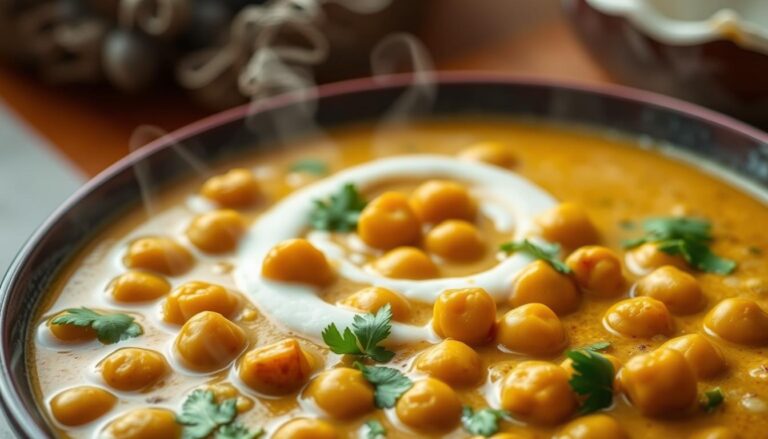
3. Creamy Chickpea Curry with Spinach and Brown Rice (19g protein)
This curry is flavorful and comforting. Chickpeas are a good protein source, and spinach boosts iron. It’s a healthy meal with 19g of protein.
4. Lentil Bolognese Over Whole Wheat Pasta (24g protein)
This vegan twist on the classic Italian dish is rich in protein and fibre. Served over whole wheat pasta, it’s a satisfying meal with 24g of protein.
5. Tempeh Stir-Fry with Cashews and Vegetables (26g protein)
This stir-fry is quick and easy to make. Tempeh is a nice protein source. With cashews and vegetables, it’s a nutritious meal with 26g of protein.
6. Black Bean and Quinoa Burrito Bowl (21g protein)
This burrito bowl is a delicious and healthy meal option. Black beans and quinoa provide a complete protein. It’s a great choice with 21g of protein.
7. Sesame Ginger Edamame Noodle Bowl (23g protein)
This noodle bowl is refreshing and protein-packed. Edamame is a great protein source. With sesame ginger sauce, it’s a flavorful dish with 23g of protein.
8. Mediterranean Lentil-Stuffed Bell Peppers (18g protein)
These stuffed bell peppers are colourful and nutritious. Lentils provide a good protein source. It’s a healthy and satisfying option with 18g of protein.
9. Thai Peanut Tempeh Lettuce Wraps (25g protein)
These lettuce wraps are fun and easy to make. Tempeh is marinated in Thai peanut sauce. It’s a flavorful and protein-rich option with 25g of protein.
10. Protein-Packed Vegan Shepherd’s Pie with Lentils (20g protein)
This shepherd’s pie is comforting and healthy. Lentils provide a good protein source. It’s a great option for a weeknight dinner with 20g of protein.
11. Moroccan Chickpea and Sweet Potato Tagine (17g protein)
This tagine is flavorful and aromatic. Chickpeas and sweet potatoes make it nutritious and filling. It’s a great meal with 17g of protein.
12. Seitan Fajitas with Refried Black Beans (32g protein)
These fajitas are spicy and satisfying. Seitan is a high-protein source. It’s a great option with 32g of protein.
13. Teriyaki Glazed Tofu and Vegetable Skewers (22g protein)
These skewers are fun and easy to make. Teriyaki-glazed tofu is a great source of protein. It’s a healthy and delicious option with 22g of protein.
14. White Bean and Kale Power Soup (19g protein)
This soup is nutritious and comforting. White beans provide a good protein source. It’s a great option for a healthy meal with 19g of protein.
15. High Protein Vegan Pizza with Cashew Cheese and Chickpeas (24g protein)
This pizza is a delicious and healthy twist on a classic favourite. Cashew cheese and chickpeas are good sources of protein. It’s a nutritious meal with 24g of protein.
My Meal Prep Tips for Busy Weeknights
Spending a few hours on the weekend on meal prep changes everything. It lets me eat healthy, high-protein vegan meals even when I’m super busy. Planning is key.
Batch Cooking Proteins Every Sunday
Batch cooking proteins is a big part of my prep routine. It gives me a steady supply of protein for different meals all week.
Cooking Large Batches of Beans and Lentils
Cooking beans and lentils in bulk saves time and boosts protein. I cook a big batch on Sundays. Then, I use it in various recipes all week.
- Cook a large batch of beans or lentils
- Season with your favourite spices
- Use in salads, soups, or as a protein source in main dishes
Marinating and Baking Tofu and Tempeh
Marinating and baking tofu and tempeh is a smart prep method. I marinate them in soy sauce, maple syrup, and spices. Then, I bake until crispy.
“Marinating tofu and tempeh not only adds flavor but also helps to tenderize them, making them more enjoyable to eat.”
Prepping Vegetables and Grains in Advance
Prepping veggies and grains ahead is just as crucial as cooking proteins. It keeps me ready to make balanced meals all week.
Washing and Chopping Produce
Chopping veggies as soon as I get them saves time later. I store them in airtight containers in the fridge.
Cooking Grains for the Week
Cooking grains like quinoa and brown rice in advance is a game-changer. I cook a big batch and portion it out for the week.
Making Sauces and Dressings Ahead
Having sauces and dressings ready can make any meal special. I make a few on the weekend and keep them in the fridge.
- Tahini dressing
- Peanut sauce
- Marinara sauce
Smart Storage and Container Systems I Use
Choosing the right containers is key to keeping ingredients fresh. I use glass containers with lids because they’re non-toxic and easy to clean.
Key features of my container system include:
- Air-tight lids to keep food fresh
- Stackable design for efficient storage
- Clear glass for easy identification of contents
Nutritional Benefits and Portion Guidance for High-Protein Vegan Meals
Exploring high-protein vegan dinners reveals their nutritional value. These meals are not just a trend. They are a healthy choice that supports overall health.
How Much Protein Do I Actually Need Daily
The amount of protein needed daily changes based on age, sex, weight, and activity level. Sedentary adults need 0.8 grams of protein per kilogram of body weight per day. But active people or those trying to build muscle need more.
For example, athletes might need up to 1.2-1.6 grams of protein per kilogram of body weight. As a vegan, I eat a variety of protein-rich foods to meet my needs.
Understanding Complete vs Incomplete Proteins
Many think vegans must eat complete proteins at every meal. But the body can mix incomplete proteins from different foods to get all amino acids. For instance, eating whole grains with legumes or nuts with seeds can provide all essential amino acids.
As a vegan, I make sure to eat a variety of foods. This ensures I get all the amino acids I need.
My Recommended Portion Sizes per Meal
Finding the right portion size for high-protein vegan meals is easy. Each meal should have protein, complex carbs, and veggies.
Protein sources can be 1/2 cup cooked legumes or 3 ounces of tofu. Grains should be 1/2 cup cooked. Vegetables should be 1-2 cups per meal.
Balancing Protein with Carbs and Healthy Fats
A balanced meal keeps energy up and hunger down. Complex carbs like whole grains and fruits give energy. Healthy fats from nuts, seeds, and avocados support heart health and add flavour.
For a balanced meal, I mix protein, carbs, and healthy fats. For example, a meal might have quinoa, roasted chickpeas, steamed broccoli, and tahini sauce.
Tips for Making High-Protein Vegan Cooking Easier
I love cooking high-protein vegan meals. I’ve found a few tips that make it simpler. With the right approach, making healthy and tasty meals is easy.
Kitchen Tools That Save Me Time
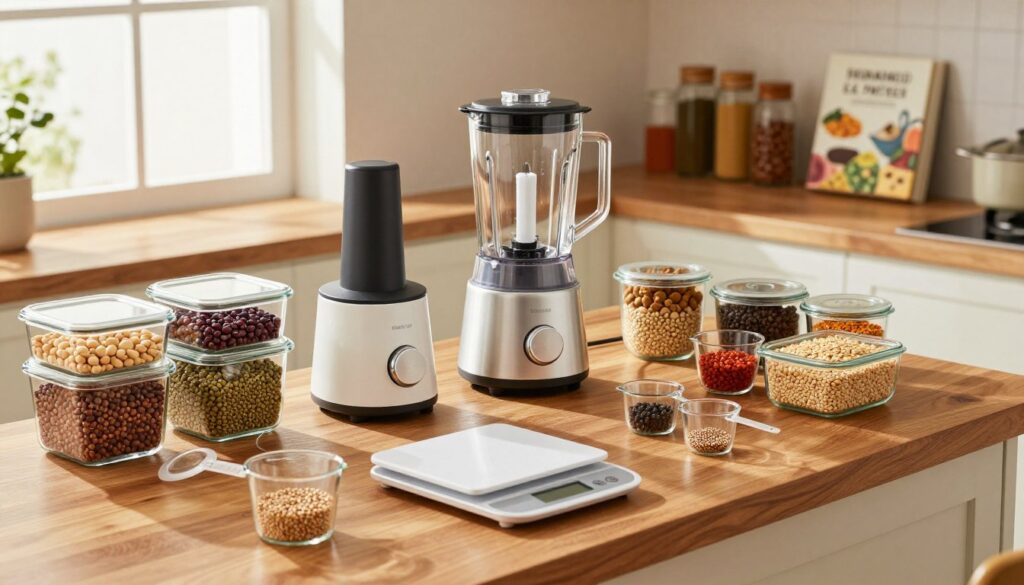
Having the right kitchen tools makes cooking easier. For high-protein vegan cooking, I find these tools essential:
- Instant Pot or Pressure Cooker: This tool quickly cooks beans, lentils, and grains.
- High-Speed Blender: Perfect for smoothies, soups, and sauces.
- Food Processor: Great for chopping veggies and making vegan burgers or patties.
- Non-Stick Skillet or Wok: Ideal for cooking tofu, tempeh, and stir-fries.
Smart Ingredient Substitutions
Sometimes, you need to substitute ingredients. Here are some smart substitutions for high-protein vegan cooking:
- Tofu or Tempeh for Seitan: Use extra-firm tofu or tempeh when you don’t have seitan.
- Lentils or Chickpeas for Beans: Use lentils or chickpeas if a recipe calls for a specific bean.
- Nutritional Yeast for Cheese: This ingredient gives a cheesy flavour without dairy.
Pantry Staples I Always Keep Stocked
Having a well-stocked pantry is crucial. Here are some staples I always have:
- Canned Beans and Lentils: Convenient for quick protein-packed meals.
- Nuts and Seeds: Almonds, chia seeds, and hemp seeds are great protein sources.
- Whole Grains: Quinoa, brown rice, and whole wheat pasta are staples for balanced meals.
- Plant-Based Protein Powders: Useful for smoothies or adding protein to meals.
By using these tips, you’ll find cooking high-protein vegan meals easier and more fun. You’ll be able to make easy recipes for a healthy meal every time.
Common Mistakes I Avoid When Cooking High-Protein Vegan Dinners
Creating a tasty, high-protein vegan dinner requires avoiding common errors. I’ve learned that even simple dishes can fail if not done right. It’s all about knowing what to do and what to avoid.
Under-Seasoning Plant-Based Proteins
One big mistake is not seasoning plant-based proteins enough. Tofu, tempeh, and seitan can taste bland if not seasoned well. I always marinate them for at least 30 minutes to add flavour.
Skipping the Tofu Pressing Step
Another mistake is not pressing tofu before cooking. Pressing removes excess moisture, making tofu taste better and feel right. I press tofu using a tofu press or a kitchen towel for 20 minutes.
Overcooking or Under-Soaking Legumes
Legumes are key in a high-protein vegan diet, but they can be bad if overcooked or under-soaked. I soak legumes overnight and cook them until they’re tender but firm. This keeps them tasty and nutritious.
Not Combining Protein Sources Strategically
Not mixing different protein sources is a big mistake. I pair legumes with grains or nuts to get all amino acids. For example, lentils with quinoa give you everything you need.
| Common Mistake | Consequence | Solution |
|---|---|---|
| Under-Seasoning | Bland flavor | Marinate for at least 30 minutes |
| Skipping Tofu Pressing | Poor texture | Press tofu for 20 minutes |
| Overcooking/Under-Soaking Legumes | Unpalatable texture | Soak overnight, cook until tender |
| Not Combining Protein Sources | Inadequate protein intake | Pair legumes with grains or nuts |
By avoiding these mistakes, my high-protein vegan dinners are both tasty and healthy. It’s about understanding plant-based cooking and paying attention to how you prepare it.
Building My Perfect Balanced High-Protein Vegan Plate
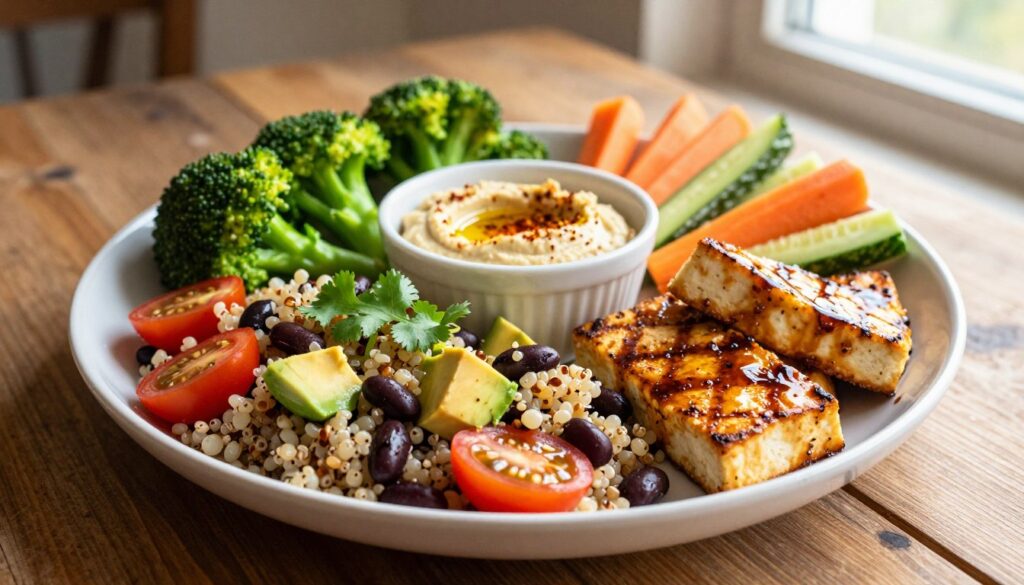
Creating a balanced high-protein vegan plate is essential for a fulfilling meal. It’s more than just adding protein and veggies. It’s about finding a balance that feeds your body and pleases your taste buds.
The Protein Foundation
Every balanced plate begins with a strong protein base. I often choose legumes, tofu, or tempeh as my main protein sources. A serving of lentils or chickpeas can offer a lot of protein. I also mix in seitan or edamame for different protein options.
Adding Complex Carbohydrates
Complex carbs are key to lasting energy. I add quinoa, farro, or whole wheat to my meals. These foods are rich in fibre and nutrients, and they pair well with proteins.
Including Healthy Fats and Colourful Vegetables
Healthy fats are vital for nutrient absorption and health. I include avocado, nuts, and seeds in my meals. I also fill my plate with colourful vegetables for a wide range of vitamins and minerals. The “rainbow rule” helps me achieve this – the more colours, the better.
- Roasted veggies like broccoli and bell peppers add flavour and nutrients.
- Sautéed spinach or kale boosts iron and antioxidants.
- Sliced avocado or olive oil adds healthy fats.
Finishing with Flavour Boosters
The last step is adding flavour boosters. I use herbs, spices, and citrus to enhance taste without extra salt or sugar. A squeeze of lemon or a sprinkle of nutritional yeast can really make a difference.
By following these steps, I make a healthy meal that’s both nutritious and tasty. It’s an easy recipe for a meal that makes me happy and healthy.
Conclusion
Adding high-protein vegan dinner recipes to your meals can change your health and energy for the better. These recipes use plant-based proteins like legumes, tofu, and tempeh. They make tasty, filling meals perfect for an active life.
Try out the 15 high-protein vegan dinner recipes I’ve listed. Feel free to add your own twist to make them special. With tips like cooking proteins and veggies ahead of time, you can easily fit these meals into your weeknights.
Choosing the right proteins and balancing them with carbs and fats can enhance your vegan dinners. Start cooking today to improve your health and help the planet.
🌱 Explore Our Vegan & Vegetarian Recipes
🌙 Hearty Meals
- ☀️ Rich & Savoury Vegetarian Moussaka – A Mediterranean flavour bomb
- ☀️ Creamy Coconut Chickpea Curry – A comforting bowl of bliss
- ☀️ Heavenly Cashew Shahi Paneer – A luxurious vegetarian feast
🌙 Quick & Easy
- ☀️ Easy Meatless Tacos – Ready in 20 minutes
- ☀️ Vegetarian Stuffed Mushrooms – Perfect for a light meal
🌙 Breakfast & Comfort
- ☀️ Delicious Vegetarian Breakfast Recipes – Start your day right
- ☀️ 21 Easy Vegan Comfort Food Recipes – Even non-vegans love them
- ☀️ 5 Simple Vegan Breakfast Recipes – Quick morning ideas
🌙 Low-Carb & Soups
- ☀️ Quick & Flavorful Vegan Low Carb Dinner Recipes
- ☀️ Vegan Tomato White Bean Stew – Happiness in every bite
🌙 Vegan Favorites
- ☀️ Best Vegan Mac and Cheese Recipe – Creamy, cheesy, and delicious
- ☀️ 15 Easy Vegan Dinner Recipes for Busy Weeknights
✨ Free Ebook: 5 Healthy Snack Recipes ✨
💌 Get more recipes by email! Subscribe to our newsletter for weekly diabetes-friendly recipes and tips. Subscribe →

About the Author
This recipe was created and reviewed by Cooking All Recipes, a food-focused platform dedicated to easy, tested, and family-friendly recipes.
Our recipes are inspired by classic American and British cuisine and are carefully written to ensure clarity, taste, and reliability for home cooks.
Each recipe is tested multiple times to ensure consistent results for home bakers.
FAQ
What are some high protein vegan dinner recipes that are easy to make?
How can I ensure I’m getting enough protein on a vegan diet?
What are some good plant-based protein sources for dinner?
Can I make high protein vegan dinners in advance?
How do I balance protein with carbs and healthy fats in a vegan meal?
What are some common mistakes to avoid when cooking high protein vegan dinners?
Are homemade high protein vegan dinners healthier than store-bought or restaurant meals?
How did you find this recipe?
There are no reviews yet. Be the first one to write one.