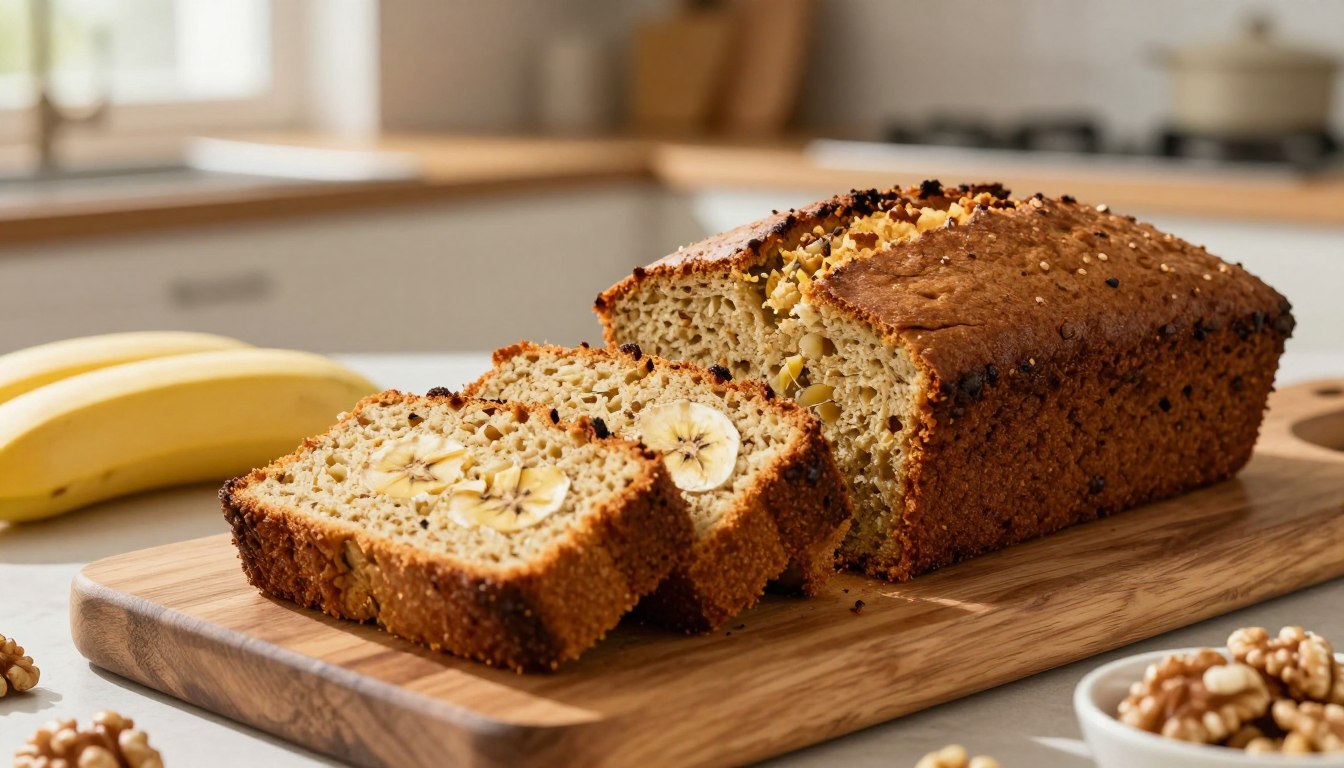
Secrets to the Best Healthy Gluten Free Banana Bread (Easy Recipe)
I used to feel guilty about the bananas on my counter. Now, I see them as a chance to make something special for my family. I’ve tried many methods to get the perfect texture every time.

Table of Contents
Finding a gluten-free banana bread healthy enough was a challenge. Traditional treats made me tired by noon. I chose ingredients high in fibre and natural sweetness to keep it balanced and tasty.
This moist and healthy gluten-free banana bread is one of the delicious recipes in our Easy Gluten Free Dinner Ideas collection – perfect for breakfast or a snack.
I’m excited to share the secrets of this moist bread without extra oils. You’ll learn how easy changes can improve your mornings and baking. Let’s explore the secrets behind this perfect loaf.
✨ Free Ebook: 5 Healthy Snack Recipes ✨
💌 Get more recipes by email! Subscribe to our newsletter for weekly diabetes-friendly recipes and tips. Subscribe →
Key Takeaways
- Uses low glycemic index ingredients to support stable glucose levels.
- High fibre content provides a satisfying and filling snack option.
- Naturally sweetened with fruit to reduce the need for refined sugar.
- Provides a moist texture that rivals traditional healthy banana bread recipes.
- Quick and simple preparation using only one large mixing bowl.
- Perfect for meal prepping and remains fresh for several days.
Why You’ll Love This Recipe
I’m excited to share my secrets for the best healthy gluten-free banana bread. It’s perfect for everyone. This recipe is a must-try for many reasons.
Perfectly Moist and Tender Texture
This recipe has a perfectly moist and tender texture. It uses super-ripe bananas and a special flour blend. This keeps the bread fresh and delicious for days.
The secret is in the ingredients and a simple technique. I’ll share it later.
Naturally Sweetened with No Refined Sugar
This recipe is naturally sweetened with no refined sugar. Ripe bananas are the main sweetener. This reduces sugar and boosts flavour.
It’s a great choice for those wanting a low-sugar banana bread.
Foolproof Method That Works Every Time
The method for this gluten-free banana bread for coeliacs is easy and always works. It involves simple mixing and a resting period. This ensures the ingredients blend perfectly, making the bread consistently delicious.
By following this recipe, you can make a delicious, healthy banana bread. It’s gluten-free and low in sugar. This makes it perfect for many dietary needs.
The Secrets Revealed
I’ve found the secret to making perfect gluten-free banana bread. It’s all about a few key elements. After years of trying and perfecting, I’m ready to share what makes this recipe stand out.
Super Ripe Bananas Are Non-Negotiable
Using super-ripe bananas is the first secret. The riper the bananas, the sweeter and softer the bread will be. I choose bananas with brown spots all over for the best sweetness and texture.
The Perfect Flour Blend
Choosing the right flour blend is also key. A mix of gluten-free flours makes the bread good for those who can’t eat gluten. It also makes the bread healthier. For example, buckwheat flour adds protein, fibre, and minerals. It makes the banana bread taste better and feel softer.
- Almond flour for added moisture and flavour
- Coconut flour for its absorbency and fibre content
- Buckwheat flour for its nutritional benefits and distinct flavour
Don’t Overmix the Batter
Don’t overmix the batter to keep the bread soft. Overmixing makes the bread dense and hard. Mix the wet and dry ingredients gently until they just come together. A little lumpiness is okay; it means you’ve mixed it right.
“The key to a tender crumb is gentle mixing. Treat the batter with care, and it will reward you with a deliciously soft loaf.”
Rest the Batter Before Baking
Letting the batter rest before baking is important. It lets the flours soak up the liquid, making the bread even and flavorful. This step is key for a moist and tasty loaf. Resting the batter helps the ingredients blend better, improving the bread’s quality.
What Makes This Gluten-Free Banana Bread Healthy
This gluten-free banana bread recipe is not just tasty. It’s also packed with health benefits. I’ve chosen ingredients that are both delicious and nutritious.
Nutrient-Dense Flour Choices
The flour choice is key to making this banana bread healthy. I’ve picked nutrient-dense flours that are full of fibre, vitamins, and minerals. These flours offer a better nutritional profile and keep you feeling full longer.
Benefits of Adding Buckwheat Flour
Buckwheat flour is a key ingredient in this recipe. It’s gluten-free and rich in magnesium. Magnesium is vital for energy and nerve function. So, this banana bread is a high magnesium banana bread, great for boosting magnesium levels.
Low Sugar and Blood Sugar Friendly
This banana bread is low in sugar. The bananas’ natural sweetness means no refined sugars are needed. It’s perfect for those watching their sugar intake. It’s also great for banana bread for diabetics, as it doesn’t raise blood sugar levels.
Suitable for Coeliacs and Gluten Sensitivities
This banana bread is gluten-free, making it safe for those with coeliac disease or gluten sensitivities. The gluten-free flours ensure everyone can enjoy it without worrying about gluten reactions. It’s a treat that’s inclusive for all.
Ingredients You’ll Need
To make the best healthy gluten-free banana bread, you need a few simple ingredients. These ingredients work together to create a moist and tender loaf. The quality of these ingredients affects the taste and nutritional value of your banana bread.
For the Dry Ingredients
The dry ingredients are the base of your gluten-free banana bread. You’ll need:
- 1 1/2 cups of gluten-free all-purpose flour
- 1/2 cup of almond flour for added moisture and nutrition
- 1/4 cup of coconut sugar
- 1/2 teaspoon of salt
- 1 teaspoon of baking soda
- 1/2 teaspoon of ground cinnamon for flavour
For the Wet Ingredients
The wet ingredients bring everything together, adding moisture and flavour. You’ll need:
- 3 large ripe bananas, mashed
- 2 large eggs
- 1/4 cup of melted coconut oil
- 1/4 cup of plain Greek yoghurt
- 1 teaspoon of vanilla extract
Optional Add-Ins for Extra Nutrition
To boost the nutritional value and flavour of your banana bread, consider adding:
- 1/2 cup of chopped walnuts or pecans for added crunch and omega-3 fatty acids
- 1/2 cup of dark chocolate chips for a sweet treat
- 1/4 cup of chia seeds for an extra dose of fibre and omega-3s
Ingredient Substitutions
For those with different dietary needs or preferences, here are some substitution options:
- Replace almond flour with sunflower seed flour for a nut-free version.
- Use dairy-free yoghurt and coconut oil to make it dairy-free.
- Swap coconut sugar with date sugar for a different flavour profile.
By choosing the right ingredients and making a few simple substitutions, you can enjoy a healthy gluten-free banana bread that suits your dietary needs.
Step-by-Step Instructions
Starting with a perfectly baked loaf is easy. First, prepare your pan and preheat the oven. Making this low sugar banana bread is simple. It requires some care, but the result is moist and delicious.
Step 1: Prepare Your Pan and Preheat the Oven
Begin by heating your oven to 350°F (175°C). Grease a 9×5-inch loaf pan with non-stick spray or coconut oil. Then, set it aside. This step is key to preventing your gluten-free banana bread for coeliacs from sticking.
Step 2: Mash the Bananas Properly
In a large bowl, mash 3-4 ripe bananas with a fork or potato masher. Make sure they’re smooth but a bit lumpy. This texture adds to the bread’s charm.
Step 3: Mix the Wet Ingredients
Add 2 large eggs, 1/4 cup of melted coconut oil, and 1 teaspoon of vanilla extract to the bananas. Mix until everything is well combined.
Step 4: Combine the Dry Ingredients
In another bowl, mix 1 1/2 cups of gluten-free flour blend, 1/2 cup of buckwheat flour, 1/2 teaspoon of salt, and 1 teaspoon of baking soda. Whisk until smooth.
| Dry Ingredients | Quantity |
|---|---|
| Gluten-free flour blend | 1 1/2 cups |
| Buckwheat flour | 1/2 cup |
| Salt | 1/2 teaspoon |
| Baking soda | 1 teaspoon |
Step 5: Fold Wet and Dry Together Gently
Mix the wet and dry ingredients gently until just combined. Avoid overmixing.
Step 6: Rest the Batter for 10 Minutes
Let the batter rest for 10 minutes. This allows the flours to soak up the liquid.
Step 7: Bake to Golden Perfection
Pour the batter into the prepared pan and bake for 45-50 minutes. A toothpick inserted into the centre should come out clean.
Step 8: Cool Completely Before Slicing
After baking, let the banana bread cool in the pan for 10 minutes. Then, transfer it to a wire rack to cool completely.
Expert Tips for Success
Follow these expert tips to bake the perfect gluten-free banana bread every time. Paying attention to a few key details is crucial for the best results.
How to Measure Gluten-Free Flour Correctly
Measuring gluten-free flour correctly is key because it’s denser than regular flour. Use a digital scale or the ‘scoop and level’ method. This ensures the right amount for your banana bread’s texture.
Testing for Doneness
To see if your banana bread is done, use a toothpick. If it comes out clean or with a few moist crumbs, it’s ready. You can also check by gently pressing the top; if it springs back, it’s done. Avoid overbaking to prevent dryness.
Preventing a Soggy Bottom
A soggy bottom is common in gluten-free baked goods. Ensure your oven is at the right temperature. Use a baking stone or cast-iron pot for better heat distribution. Don’t overmix the batter to avoid a dense, soggy texture.
Adjusting Baking Time for Different Pan Sizes
The baking time changes with pan size and shape. A larger, flatter loaf bakes faster than a smaller, thicker one. Keep an eye on your bread and adjust the baking time as needed. Here’s a guide to help you adjust:
| Pan Size | Baking Time |
|---|---|
| 9×5 inch loaf pan | 45-55 minutes |
| 8×4-inch loaf pan | 50-60 minutes |
| Muffin tin | 20-25 minutes |
Making It Extra Moist
To make your banana bread extra moist, add an extra ripe banana or a tablespoon of Greek yogurt. Buckwheat flour adds nutrition and moisture. The benefits of buckwheat in banana bread include better nutrition and a lower glycemic index, making it healthier.
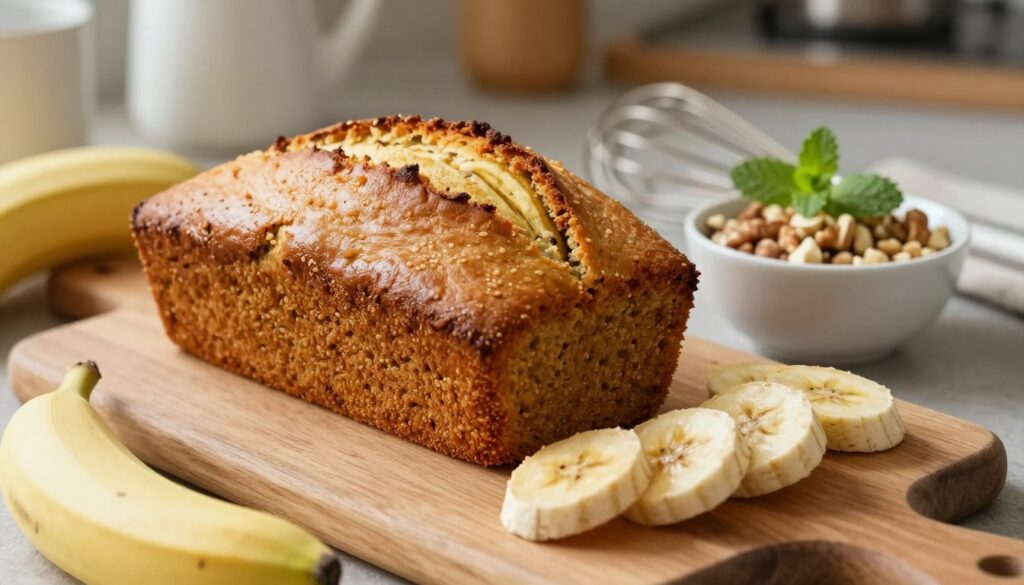
By following these tips, you’ll bake a delicious, moist, and healthy gluten-free banana bread. Using buckwheat flour makes it a high magnesium banana bread, offering extra health benefits.
Variations to Try
I’ve found many ways to change the basic gluten-free banana bread recipe. You can add new flavours or make it fit special diets. There are lots of options to try.
Chocolate Chip Banana Bread
Dark chocolate chips make the bread taste amazing and are perfect for those who love sweets. Choose dairy-free chocolate chips for an allergy-friendly treat.
Blueberry Banana Bread
Adding fresh or dried blueberries gives a fruity twist. Blueberries are full of antioxidants and add sweetness. This makes for a healthier snack.
Low Salicylate Banana Bread
This version is for those who can’t handle salicylates. It uses ingredients low in salicylates. So, you can enjoy banana bread without problems.
Diabetic-Friendly Banana Bread
This recipe is great for diabetics. It uses sugar substitutes and special flours. This way, you can have tasty banana bread that’s good for your diet.
High Magnesium Buckwheat Banana Bread
Using buckwheat flour makes the bread more nutritious. Buckwheat is full of magnesium. This is great for those who want to increase their magnesium.
Nut-Free Version
This version is safe for those with nut allergies. It replaces nuts with safe ingredients. So, you can enjoy banana bread without worrying about allergies.
These changes show how versatile the gluten-free banana bread recipe is. You can try different ingredients to make your favourite loaf. It’s fun to experiment and find what you like best.
- Experiment with different combinations of fruits and spices.
- Try using various types of sugar substitutes for a lower glycemic index.
- Adjust the recipe to accommodate other dietary restrictions or preferences.
Storage Instructions
Keeping your gluten-free banana bread fresh is all about how you store it. The right storage keeps the bread fresh and tasty. This way, you can enjoy every slice.
Room Temperature Storage
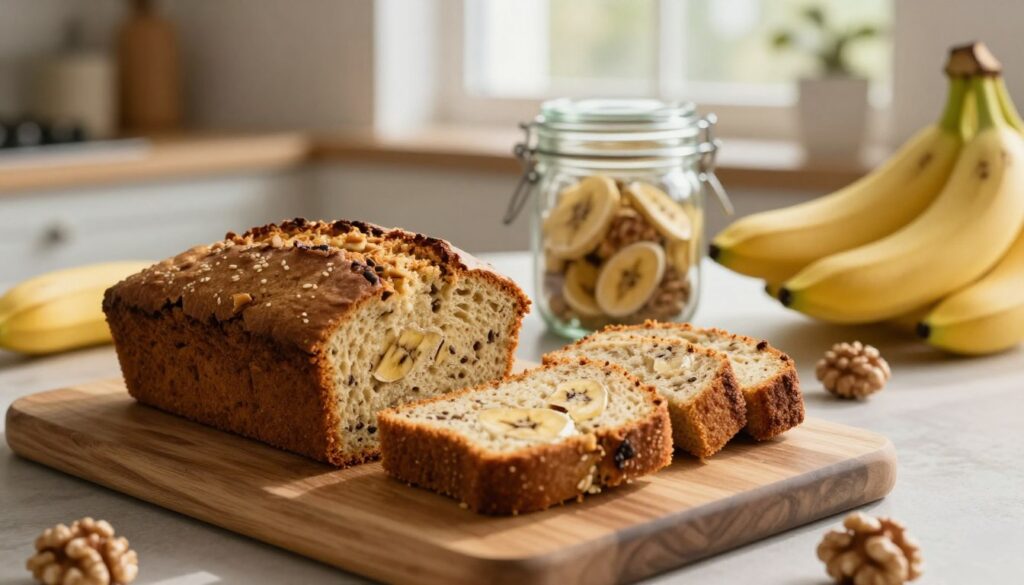
For a few days, storing your banana bread at room temperature works well. Wrap it tightly in plastic wrap or foil. Keep it in a cool, dry spot. Stay away from direct sunlight to avoid staleness or bad flavours.
Refrigerator Storage
For longer storage, the fridge is better. Wrap it well in plastic or foil and put it in the fridge. It stays fresh for up to a week. Just slice and serve, or reheat later.
Freezer Storage
Freezing is the best option for long-term storage. Wrap it in plastic or foil, then in a freezer-safe bag. Mark the bag with the date for easy tracking. Frozen banana bread lasts up to 3 months. Thaw at room temperature or reheat when you’re ready.
How to Reheat for Best Texture
To make your stored banana bread taste like it’s just baked, reheating is key. For fridge or freezer bread, wrap it in foil and warm it at 350°F (175°C) for 10-15 minutes. This brings back its moisture and softness. Reheat slices separately to keep the loaf moist.
🌾 Love gluten-free recipes?
Discover more delicious and easy gluten-free meals in our complete guide:
👉 Easy Gluten Free Dinner Ideas You’ll Love Tonight
✅ Enjoy flavorful, family-friendly dishes without the gluten.
✨ Free Ebook: 5 Healthy Snack Recipes ✨
💌 Get more recipes by email! Subscribe to our newsletter for weekly diabetes-friendly recipes and tips. Subscribe →

About the Author
This recipe was created and reviewed by Cooking All Recipes, a food-focused platform dedicated to easy, tested, and family-friendly recipes.
Our recipes are inspired by classic American and British cuisine and are carefully written to ensure clarity, taste, and reliability for home cooks.
Each recipe is tested multiple times to ensure consistent results for home bakers.

Conclusion
Now that you know how to make the best healthy gluten-free banana bread, it’s time to start baking! This easy recipe uses ripe bananas and healthy flours. It’s a great choice for anyone wanting a gluten-free banana bread that’s also healthy.
By following the simple steps in this article, you can make a moist and tasty loaf. It’s perfect for a quick snack or breakfast on-the-go. So, try this recipe and enjoy the delicious taste of gluten-free banana bread that’s good for you.
This gluten-free banana bread recipe is not only healthy but also versatile. It will become a favourite in your kitchen. Feel free to try different variations and share your experiences. This way, you can help others find a healthier banana bread option.
FAQ
Why do you recommend adding buckwheat flour to this specific recipe?
Is this loaf safe to serve as a gluten-free banana bread for coeliacs?
Can I eat this if I’m looking for a banana bread for diabetics?
How do I modify this to make it a low salicylate banana bread?
What makes this version of gluten free banana bread healthy compared to store-bought mixes?
Can I use any type of gluten-free flour blend?
How did you find this recipe?
There are no reviews yet. Be the first one to write one.